A Designer's Look at the Watercolor Christmas Fox Clipart
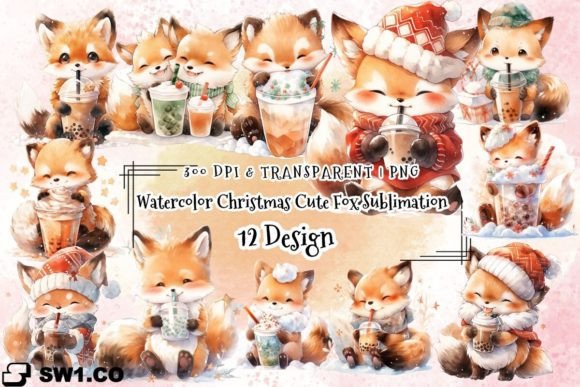
As someone who regularly turns digital designs into physical, stitched products, I approach any new clipart with a critical eye. It’s not just about whether an image is cute on screen; it’s about how it will translate into thread, fabric, and a finished product that delights a customer or holds up as a gift. The Watercolor Christmas Cute Fox Clipart collection, with its twelve unique PNGs, immediately struck me as having a particular charm, but I needed to think through its practical application for embroidery.
The Immediate Mood and Potential
Your first impression is one of soft, festive whimsy. The watercolor style implies a gentle, hand-painted feel—a quality that’s highly desirable in the handmade market. The fox designs aren't just holiday symbols; they're characters. This personality is key. For embroidery, this means the design isn't a stark, graphic logo, but rather an illustration that evokes warmth and a story. It naturally belongs to projects where emotion and a softer aesthetic are paramount: a personalized holiday gift, nursery decor, or boutique kitchen towels meant to feel special, not mass-produced.
Thinking about a real scenario, I pictured a custom embroidered baby blanket. The watercolor foxes, with their gentle color blends and playful poses, would offer a perfect, cozy theme without being overly bold or cartoonish. The transparent PNG background is, of course, essential here, allowing me to easily place the fox into my embroidery software and test placements without fuss.
Performance in Real Embroidery Projects
So, how does this clipart perform when it moves from a digital file to an actual embroidery project? The answer depends heavily on how you interpret it.
For custom apparel like sweatshirts or t-shirts, the watercolor aesthetic can translate beautifully into blended fill stitches, creating a painterly effect that stands out from more common graphic designs. On a tote bag or apron, it becomes a distinctive, artistic focal point. As an embroidered patch, it could have incredible appeal for craft fair products, offering a unique, holiday-themed badge that feels premium.
For small business merchandise—say, for an Etsy seller specializing in holiday goods—these foxes offer a cohesive theme across multiple products. You could use one fox on a tea towel, another on a pillow cover, and a third on a cap, creating a recognizable collection without repeating the same exact image. This boosts brand consistency and gives customers a reason to buy more than one item.
The use in digital product previews or printable mockups is also straightforward. The high-quality, transparent PNGs make it easy to overlay the designs onto photos of your finished embroidered products, enhancing your listings’ visual appeal and buyer engagement.
Where Careful Consideration is Needed
Not every design is suited for every surface, and this one requires some thoughtful application. The watercolor style likely involves subtle color gradients and soft edges. In embroidery, this can mean many thread color changes or delicate satin stitch work.
On small hoop sizes, such as for a delicate baby garment detail, the finer details might become lost or muddled if the design is scaled down too much. Stitch density needs to be managed carefully to avoid a stiff, heavy feel on lightweight or stretchy fabric. Embroidering onto dark fabric presents a classic challenge: the lighter, watercolor hues will need excellent contrast, possibly requiring a brighter thread palette or even a slightly different color interpretation than the on-screen preview.
Curved surfaces like caps or products that need frequent washing also demand attention. A design with very dense stitching might not wear as well on a curved cap brim, and a complex, multi-color fox on a kitchen towel needs to withstand laundering without losing its visual clarity.
Practical Notes for a Smooth Project
Before committing this design to a client project or a batch of holiday merchandise, I would always run a few tests.
- Test on scrap fabric first. Use the same material you plan for the final product. This reveals how the colors truly interact with the fabric and whether the stitch definition holds.
- Check thread color contrast. Don't rely solely on the digital image's colors. Match your thread choices to both the design intent and the fabric background.
- Review the design in black and white. This simple trick helps you see the structure and detail levels without color distracting you. It highlights if small elements will vanish.
- Use proper stabilizer. Especially for lighter fabrics or projects with high detail, the right stabilizer is non-negotiable to preserve the design's integrity.
- Confirm licensing. The product description mentions it can be used, but for commercial embroidery projects or selling finished items, always verify the specific license terms to ensure your use is covered.
The Impact on Your Finished Product
Choosing a design like the Watercolor Christmas Cute Fox Clipart isn't just a technical decision; it's a strategic one for your craft business or hobby. This clipart elevates the visual appeal of your work from generic to artistic. It increases product value because it feels unique and thoughtfully chosen. For a personalized gift, it adds a layer of charm that generic text cannot.
From a customer's perspective, seeing this kind of design on a handmade product builds trust and engagement. It signals that the maker has an eye for quality and style. The giftability and recognition are high—a holiday fox is memorable and seasonally perfect. For your own professionalism as a designer, using well-crafted illustrations as your base ensures your final embroidered piece starts from a strong, appealing foundation.
In the end, this collection is a robust set of design assets for anyone in the embroidery space looking to add a soft, festive, and character-driven element to their work. It encourages creativity in application across apparel, home goods, and gifts. By approaching it with the practical considerations of an embroiderer—testing, planning, and matching it to the right project—you can turn these charming digital foxes into even more charming stitched realities.