A Watercolor Bow Tie Design for Your Holiday Embroidery
First Impressions: Soft Watercolor Charm for Holiday Projects
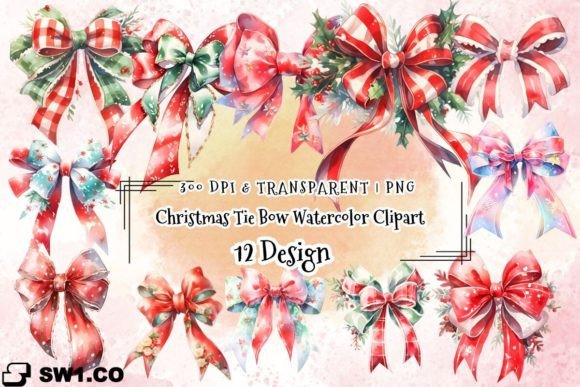
Opening this collection, the immediate mood is gentle, festive, and artistic. The Christmas Tie Bow Watercolor Clipart isn’t about harsh lines or rigid geometry; it’s about soft washes of color and a relaxed, hand-painted personality. This feels like a design that whispers ‘holiday’ rather than shouting it, which is perfect for projects aiming for a boutique or handmade aesthetic. As a designer, I look at these shapes and think they naturally belong to cozy, personal items—the kind of gifts you make with care, not mass-produced sparkle.
The level of detail here is interesting. It’s not overly complex, which is good news for embroidery. The watercolor effect means edges are often soft and blended, translating beautifully into stitch work where sharp, pixel-perfect edges aren’t the goal. The layout of the various bows offers variety without overwhelming a single project. You get a selection to match different moods: some are fuller, some more delicate. This variety is a practical win, allowing you to tailor the design to, say, a sophisticated pillow cover versus a playful baby sweater.
Where This Design Shines in Real Embroidery Work
Let’s talk real use. I’m imagining preparing a custom embroidered tote bag as a holiday gift for a client. Using one of the fuller bow designs from the Christmas Tie Bow Watercolor Clipart collection, the goal is a bag that looks handcrafted and special, not like a generic store item. The watercolor style, when translated into stitches, will give that bag a unique, painterly texture. On a sweatshirt or a cozy blanket, this design adds holiday cheer without being cartoonish. It elevates the item.
For baby clothes or nursery decor, the soft colors and shapes are a natural fit. A small bow embroidered on a tea towel or a kitchen apron brings a touch of festive personality without being overly kitschy. It’s also a strong candidate for creating embroidered patches—the transparent background of the PNG files makes placement easy, and the design’s clear shape ensures the patch will be recognizable even after stitching.
For your craft business, these graphics are versatile assets. They can be used in printable mockups to preview your embroidery designs, or as part of your digital product listings to show potential customers the aesthetic of your work. For an Etsy seller or small shop owner, using a cohesive, charming design like this across a line of holiday products—totes, caps, pillow covers—builds brand consistency. Customers recognize the style, and that builds trust in your handmade presentation.
The Giftability Factor and Customer Appeal
When a customer sees a finished product with this embroidery, the reaction I anticipate is warmth. It feels like a thoughtful, personalized gift. The watercolor approach avoids a cheap, clip-art feel, which directly affects perceived product value. It looks professional and artistic. For wedding gifts during the holiday season or boutique merchandise at a craft fair, this design has a high giftability factor—it’s special enough to be given, and desirable enough to be bought.
Considerations and Where to Use Carefully
As with any embroidery design, practical judgment is key. The soft, blended edges of the Christmas Tie Bow Watercolor Clipart mean that on very small hoop sizes, some of that watercolor nuance might lose clarity. If you’re planning a tiny bow on a cap’s curved surface or a hat’s detailed corner, you need to test first. The design might simplify beautifully, or it might need a slightly larger scale to retain its charm.
On textured fabrics like some sweaters or on stretchy fabrics, the fill stitches needed to create the watercolor effect require good stabilizer. On dark fabric backgrounds, thread color contrast is absolutely crucial—you’ll need to choose your palette carefully to make the soft colors pop, not fade into the background. For products that will need frequent washing, like kitchen towels or baby items, consider the stitch density. A denser fill stitch area might hold up better, but again, testing on scrap fabric first is non-negotiable.
Also, while the transparent PNG background is fantastic for placement, remember that the final embroidery file’s stitch construction will determine clarity. This collection is a graphic starting point. For machine embroidery, it will need to be digitized into an embroidery file with appropriate satin stitches, fill stitches, and running stitch outlines. That digitization process will define how well the watercolor illusion translates into thread.
Practical Notes for the Embroidery Designer
Before you commit this to a client project or a batch of small shop merchandise, do the groundwork. Test the design on scrap fabric first, ideally the same fabric you plan to use for the final product. Check your thread color contrast against both light and dark fabric backgrounds—sometimes a color that looks perfect on screen reads differently in thread.
Review the stitch density in your digitized embroidery file. Is it appropriate for your fabric texture? Confirm your hoop size can accommodate the design with enough detail to keep its character. Inspect small details in your test stitch-out; are any corners or tiny areas too dense or too loose?
It’s also wise to test the design in black and white mockups to see how the shape holds up without color, which can inform placement on patterned fabrics. Use proper stabilizer for your specific application—a tote bag might need one type, a baby knit another. Crucially, check the licensing terms for this Christmas Tie Bow Watercolor Clipart. Confirm it can be used for both personal and commercial projects, and understand any requirements before you sell finished items or create derivative digital embroidery files for sale.
A Final Thought on Professional Results
This design collection, when approached with this practical mindset, can become a wonderful asset for your holiday embroidery projects. It brings a soft, artistic voice to custom apparel, personalized gifts, and craft business items. By focusing on how it will actually look after stitching, considering your customer’s reaction, and matching it to the right product—be it an apron, a pillow cover, or a boutique sweatshirt—you leverage its full potential. That’s the mark of an experienced designer: seeing the graphic not just as a picture, but as the blueprint for a beautiful, stitched, finished product.